
Tasco Telescope Manual: A Comprehensive Guide
Tasco offers telescopes for all levels‚ from novice to advanced astronomers‚ alongside binoculars‚ trail cameras‚ and even microscope kits for diverse exploration!
Understanding Tasco Telescope Series
Tasco categorizes its telescopes into three primary series: Novice‚ Luminova‚ and Spacestation‚ each designed to cater to different experience levels and budgets. The Novice series represents an economical entry point‚ exemplified by the 60mm refractor‚ featuring manual focus and simple view finding – ideal for beginners.
Stepping up‚ the Luminova series provides mid-range options‚ balancing performance and affordability. Finally‚ the Spacestation series caters to advanced users‚ offering more sophisticated features and enhanced optical capabilities for serious astronomical observation. Within each series‚ numerous models exist‚ allowing users to select a telescope perfectly suited to their individual needs and celestial ambitions;
Novice Series: Entry-Level Telescopes
Tasco’s Novice series is specifically engineered as an accessible introduction to astronomy‚ perfect for budding stargazers. These telescopes prioritize simplicity and affordability‚ making them an excellent first telescope. The Novice 60mm refractor stands out as a particularly economical choice‚ offering a straightforward observing experience.
Key features include manual focusing mechanisms and basic viewfinders‚ allowing users to learn the fundamentals of telescope operation without overwhelming complexity. While not boasting the advanced capabilities of higher-tier models‚ the Novice series provides a satisfying initial glimpse into the wonders of the night sky‚ fostering a passion for astronomical exploration.
Luminova Series: Mid-Range Options
Tasco’s Luminova series bridges the gap between entry-level and advanced telescopes‚ offering a step up in performance and features. These mid-range options cater to enthusiasts seeking a more detailed and rewarding observing experience. While specific models within the Luminova series vary‚ they generally incorporate improved optics and more robust mounts compared to the Novice line.
Expect enhanced light-gathering capabilities and sharper images‚ allowing for clearer views of celestial objects. The Luminova series represents a sweet spot for those wanting to delve deeper into astronomy without the complexity or cost of professional-grade equipment‚ providing a balanced and versatile observing platform.
Spacestation Series: Advanced Models
Tasco’s Spacestation series represents the pinnacle of their telescope offerings‚ designed for serious amateur astronomers. These advanced models boast superior optics‚ precision engineering‚ and a range of features to maximize observing potential. Expect larger apertures for enhanced light gathering‚ resulting in brighter and more detailed views of faint celestial objects.
Spacestation telescopes often include equatorial mounts for accurate tracking of stars and planets‚ alongside advanced accessories. They are ideal for astrophotography and detailed visual observation‚ offering a sophisticated and rewarding experience for dedicated stargazers seeking the highest level of performance from a Tasco instrument.
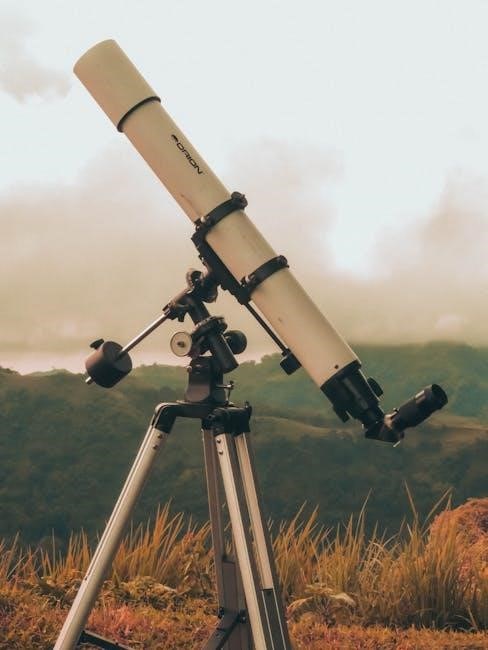
Key Components of a Tasco Telescope
Tasco telescopes consist of an optical tube‚ a mount (altazimuth or equatorial)‚ eyepieces for magnification‚ and a finderscope for initial object location.

Optical Tube Assembly
The optical tube assembly is the core of any Tasco telescope‚ housing the primary optical elements responsible for gathering and focusing light. These telescopes utilize refractor or reflector designs‚ each with unique characteristics. Refractors use lenses‚ while reflectors employ mirrors to achieve magnification.
The tube itself is typically constructed from aluminum or a durable composite material‚ designed to minimize flex and maintain precise alignment. Inside‚ you’ll find the objective lens or primary mirror‚ crucial for image quality. Proper handling and protection of this assembly are vital for optimal performance and longevity. Maintaining a clean interior and secure mounting are key considerations for any Tasco telescope owner.
Mount Types: Altazimuth and Equatorial
Tasco telescopes utilize two primary mount types: altazimuth and equatorial. Altazimuth mounts are simpler‚ moving up-and-down (altitude) and left-and-right (azimuth)‚ making them intuitive for beginners. They’re excellent for casual observing and terrestrial viewing.
Equatorial mounts‚ however‚ are designed to counteract Earth’s rotation‚ allowing for easier tracking of celestial objects. These mounts require initial alignment with the polar axis. While more complex to set up‚ they provide smoother tracking for astrophotography and extended viewing sessions. The choice depends on your observing goals and experience level‚ with Tasco offering options for both.
Eyepieces and Magnification
Tasco telescopes achieve varying magnifications through interchangeable eyepieces. Magnification is calculated by dividing the telescope’s focal length by the eyepiece’s focal length. Lower magnification eyepieces provide wider fields of view‚ ideal for locating objects and observing larger celestial features like nebulae.

Higher magnification eyepieces narrow the field of view‚ revealing finer details on planets and the Moon. However‚ excessive magnification can result in a dim‚ blurry image. Selecting the right eyepiece depends on observing conditions and the object being viewed. Tasco scopes often include multiple eyepieces for versatility.
Finderscope: Aligning and Using
Tasco telescopes include a finderscope – a small‚ low-power telescope – to help locate objects. Initially‚ the finderscope must be aligned with the main telescope. This is done by centering a distant daytime object in the main telescope’s eyepiece and then adjusting the finderscope’s screws until the same object is centered within its crosshairs.
Once aligned‚ use the finderscope to aim the telescope at a desired celestial target. The object will then appear in the main telescope’s field of view. Regularly check alignment‚ as bumps or movement can misalign the finderscope‚ hindering accurate targeting.

Setting Up Your Tasco Telescope
Proper setup involves assembling the telescope‚ carefully aligning the finderscope‚ and then balancing the optical tube for smooth‚ stable viewing experiences.
Assembling the Telescope
Carefully unpack all components and refer to your specific model’s diagram within the Tasco telescope manual. Begin by attaching the mount to the tripod‚ ensuring a secure connection. Next‚ slide the optical tube into the mount‚ tightening the necessary knobs or screws – do not overtighten!
Attach accessories like the finderscope and eyepiece‚ again consulting the manual for correct placement. Double-check all connections before proceeding. Remember‚ a stable assembly is crucial for optimal viewing. Take your time and avoid forcing any parts together; gentle pressure is key. A properly assembled telescope provides a foundation for successful stargazing adventures.
Aligning the Finderscope
Proper finderscope alignment is vital for locating celestial objects efficiently. During daylight‚ point your telescope at a distant‚ easily identifiable target. Center this object in the main telescope’s eyepiece using a low-power eyepiece.
Now‚ look through the finderscope and adjust its alignment screws until the same object is centered within its crosshairs. This process ensures the finderscope and telescope are accurately aligned. Recheck alignment periodically‚ as bumps or movement can cause misalignment. A well-aligned finderscope dramatically simplifies locating and tracking objects in the night sky‚ enhancing your observing experience.

Balancing the Telescope
Achieving proper balance is crucial for smooth telescope operation and preventing strain on the mount. Begin by loosening the declination and right ascension clutches on your Tasco telescope mount. Gently release the telescope; it should remain stationary in any position.
If it drifts‚ adjust the counterweight(s) on the mount until balance is achieved. Ensure the telescope doesn’t tip forward‚ backward‚ or to either side. A balanced telescope moves effortlessly‚ allowing for precise tracking of celestial objects. Regular balancing is essential‚ especially after changing eyepieces or adding accessories.

Using Your Tasco Telescope
Mastering focusing‚ selecting appropriate eyepieces‚ and understanding basic celestial navigation unlocks the wonders of the universe with your Tasco telescope!
Focusing Techniques
Achieving a sharp image with your Tasco telescope requires understanding focusing techniques. Begin with a low-power eyepiece‚ as it provides a wider field of view and makes initial focusing easier. Slowly turn the focus knob – typically located near the eyepiece holder – until the image appears as clear as possible.
If using a manual focus model‚ like the Novice 60mm‚ small adjustments are key. Atmospheric conditions can affect focus‚ so continuous minor adjustments may be necessary. For higher magnification‚ refocus after changing eyepieces. Remember‚ patience is crucial; finding the sweet spot takes practice. A properly focused image reveals stunning details of celestial objects!
Choosing the Right Eyepiece
Selecting the appropriate eyepiece significantly impacts your viewing experience with a Tasco telescope. Lower magnification eyepieces (larger focal length‚ e.g.‚ 20mm) offer a wider field of view‚ ideal for locating objects and observing larger celestial features like the Moon. Higher magnification eyepieces (smaller focal length‚ e.g.‚ 10mm) reveal finer details‚ but have a narrower field of view and require precise focusing.
Start with a low-power eyepiece to find your target‚ then gradually increase magnification. Remember that excessive magnification isn’t always better; atmospheric conditions limit useful magnification. Consider the telescope’s capabilities and the object you’re observing when making your selection.
Celestial Navigation Basics

Using a Tasco telescope for celestial navigation begins with understanding star charts and locating prominent constellations. Familiarize yourself with the night sky and learn to identify key stars. Utilize the finderscope‚ properly aligned‚ to initially locate objects before viewing them through the main telescope.
As Earth rotates‚ objects appear to move across the sky; tracking this movement requires gentle adjustments to the telescope’s mount. Knowing the approximate coordinates (Right Ascension and Declination) of celestial objects aids in locating them. Practice and patience are key to mastering basic celestial navigation with your Tasco telescope.

Tasco Telescope Maintenance & Troubleshooting
Regular cleaning of optics and addressing common issues—like blurry views—ensure optimal performance; downloadable Tasco manuals (PDF) provide detailed guidance.
Cleaning the Optics
Maintaining pristine optics is crucial for clear views. Dust and fingerprints degrade image quality‚ so gentle cleaning is essential. Always begin by using a soft brush or canned air to remove loose particles‚ avoiding excessive pressure. For stubborn smudges‚ breathe lightly on the lens to create condensation‚ then gently wipe with a specialized lens cleaning cloth in a circular motion.
Never use household cleaners or abrasive materials‚ as these can permanently damage the coatings. Isopropyl alcohol‚ diluted with distilled water‚ can be used sparingly for tougher residue‚ but ensure complete evaporation before reassembling. Proper cleaning extends the life of your telescope and preserves its optical performance‚ allowing for continued enjoyment of celestial observations.
Common Issues and Solutions
Difficulty focusing is a frequent issue‚ often stemming from improper alignment or atmospheric conditions. Ensure the telescope is balanced and the finderscope is accurately aligned. Blurry images can also indicate the need for a different eyepiece‚ depending on the target and viewing conditions. Another common problem is instability; a sturdy mount is vital to minimize vibrations.
If you encounter difficulty locating objects‚ double-check finderscope alignment and practice celestial navigation techniques. Downloading the latest Tasco telescope manual (in PDF format) can provide specific troubleshooting steps for your model. Remember to consult online resources and forums for community support and shared solutions.
Downloading Tasco Telescope Manuals (PDF)
Accessing your Tasco telescope’s manual is straightforward. Numerous online resources host downloadable PDF versions for 37 different Tasco telescope devices. These manuals encompass user guides‚ operating instructions‚ and detailed service manuals‚ offering comprehensive support for your specific model; Websites dedicated to telescope documentation provide a centralized location to locate the correct manual.
Simply choose your appliance from the listed options to view all available service materials. Having the PDF readily available allows for quick troubleshooting and ensures you can fully utilize your telescope’s features. Regularly check for updated manuals as Tasco occasionally releases revisions.

Tasco Products Beyond Telescopes
Tasco extends beyond telescopes‚ offering quality binoculars‚ trail cameras for outdoor adventures‚ and even rifle scopes catering to diverse hunting needs and interests.
Tasco Binoculars and Trail Cameras
Tasco’s reputation extends far beyond telescopes‚ encompassing a robust line of binoculars designed for a multitude of purposes. Whether you’re an avid birder‚ a dedicated hunter‚ or simply enjoy observing the night sky‚ Tasco binoculars deliver clear and reliable performance. They offer various magnification levels and objective lens sizes to suit different viewing conditions and preferences.
Furthermore‚ Tasco provides a selection of trail cameras‚ ideal for wildlife observation and security purposes. These cameras capture high-quality images and videos‚ often featuring motion detection and night vision capabilities. They are valuable tools for monitoring remote areas‚ studying animal behavior‚ or ensuring the safety of your property. Both binoculars and trail cameras represent Tasco’s commitment to providing quality optics for outdoor enthusiasts.
Tasco Rifle Scopes
Tasco caters to the hunting community with a diverse range of rifle scopes engineered for precision and reliability. These scopes are designed for various hunting styles and firearm types‚ offering features like adjustable magnification‚ illuminated reticles‚ and durable construction. Hunters rely on Tasco rifle scopes to enhance accuracy and improve their overall shooting experience.
The company provides options suitable for many types of hunting‚ ensuring there’s a Tasco scope to meet individual needs. They are built to withstand challenging weather conditions and recoil‚ maintaining zero and providing a clear sight picture. Tasco’s dedication to quality optics extends to its rifle scope line‚ making them a trusted choice among shooting enthusiasts.
Worlds of Entertainment Kits (Including Microscope)
Tasco’s “Worlds of Entertainment” kits offer a fascinating introduction to science and exploration‚ extending beyond astronomy; These kits‚ designed exclusively for Tasco‚ contain everything needed for a variety of experiments‚ including dissecting‚ raising Brine Shrimp‚ and studying minerals and crystals. A standout feature is the included 960 Zoom microscope‚ providing detailed views of microscopic worlds.
These kits are complete with all necessary materials‚ often housed in a fitted styrofoam box for convenient storage and transport. They’re perfect for budding scientists and curious minds‚ fostering a love for learning through hands-on activities. Tasco’s commitment to accessible science education shines through these engaging and comprehensive kits.
No Responses