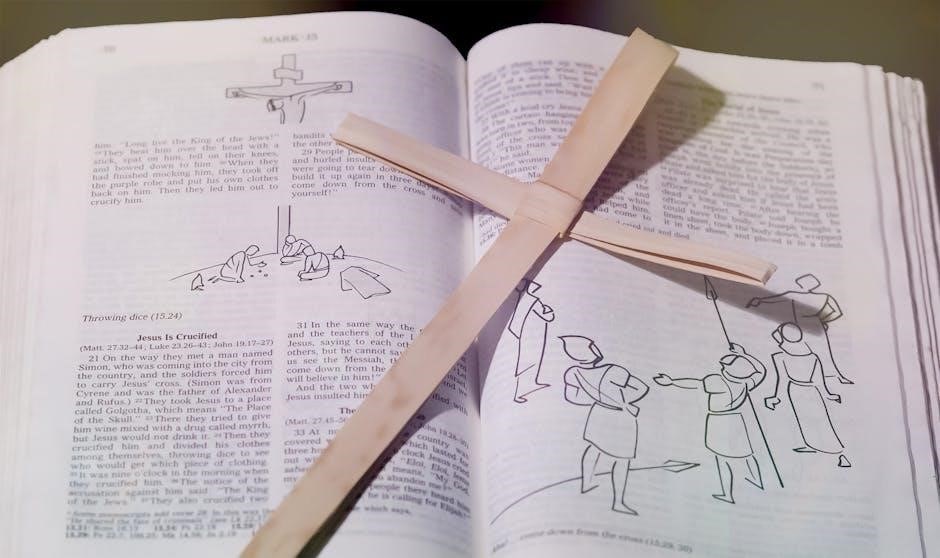
This study guide delves into Lee Strobel’s impactful work, offering a structured exploration of evidence supporting Christian faith, designed for both individual and group engagement.
It’s a resource to examine arguments, expert testimonies, and address common objections, ultimately strengthening one’s understanding of the historical Jesus and apologetics.
The guide complements the book, providing discussion questions and further study resources, making it ideal for seekers, skeptics, and believers alike.
Overview of Lee Strobel’s Work
Lee Strobel, a former investigative journalist, transitioned from skepticism to faith, meticulously examining evidence for Christianity. His renowned book, “The Case for Christ,” presents a compelling argument for Jesus’ divinity, utilizing his legal and journalistic skills.
Strobel’s work isn’t merely theological; it’s a rigorous investigation, featuring interviews with leading scholars and archaeological findings. He authored numerous other books, and his approach emphasizes reason and evidence in defending the Christian faith, impacting apologetics significantly.
Purpose of the Study Guide
This study guide serves as a companion to Lee Strobel’s “The Case for Christ,” facilitating deeper engagement with its core arguments. It’s designed to encourage critical thinking, prompting exploration of historical evidence, expert testimonies, and responses to common objections.
The guide aims to equip individuals and groups to confidently articulate and defend their faith, fostering meaningful discussions and strengthening belief through reasoned examination of the presented material.

Lee Strobel’s Background and Journey
Lee Strobel, an investigative journalist, initially approached Christianity with skepticism, seeking to disprove it, but his rigorous investigation led to a profound faith transformation.
Strobel’s Initial Skepticism
Before his conversion, Strobel was a staunch atheist, viewing Christianity as intellectually unsustainable. As a seasoned legal journalist, he applied his skills to dismantle the faith, believing it lacked credible evidence.
Driven by his wife’s newfound faith, he embarked on a two-year investigation, determined to expose perceived flaws in the Christian worldview. This skepticism fueled his relentless pursuit of truth, setting the stage for his transformative journey.
He approached the subject with the objectivity of a courtroom investigator, seeking definitive answers and challenging conventional beliefs.
From Investigative Journalist to Christian
Strobel’s rigorous investigation, initially intended to disprove Christianity, unexpectedly led to his conversion. The weight of evidence – historical, archaeological, and philosophical – gradually chipped away at his skepticism.
He found compelling answers to his challenging questions, particularly regarding the resurrection of Jesus Christ, a pivotal point in his intellectual and spiritual shift.
This transformation from a hardened skeptic to a committed Christian profoundly impacted his life and career, inspiring him to share his journey with the world.

Key Arguments Presented in “The Case for Christ”
The book meticulously examines historical evidence for Jesus, the reliability of the Gospels, and the compelling claims surrounding the resurrection, forming a robust defense of faith.
Examining the Historical Evidence for Jesus
Strobel, leveraging his journalistic background, rigorously investigates evidence for Jesus’ existence beyond biblical accounts. He presents compelling arguments from non-Christian sources, exploring historical context and archaeological findings.
The study guide encourages critical thinking about the credibility of ancient texts and the corroboration of events. It challenges readers to assess the evidence as they would in a courtroom setting, seeking objective truth about Jesus’ life and impact.
This section focuses on establishing a solid historical foundation for faith.
The Reliability of the Gospels
A core component of Strobel’s investigation centers on the Gospels’ trustworthiness as historical documents. The study guide explores textual criticism, examining how accurately the biblical text has been transmitted over centuries.
It addresses questions about authorship, dating, and potential biases, presenting arguments for their reliability. Readers are prompted to consider the eyewitness testimony and the consistency of the Gospel narratives, evaluating their historical validity.
This section aims to build confidence in the Gospels’ accuracy.
Analyzing the Claims of the Resurrection
The resurrection of Jesus Christ is central to Christian faith, and the study guide dedicates significant attention to its examination. It presents evidence like the empty tomb, the post-resurrection appearances, and the transformation of the disciples.
The guide explores alternative theories attempting to explain the resurrection, critically evaluating their strengths and weaknesses. It encourages readers to weigh the historical evidence and consider the implications of Jesus’ resurrection.
This section is crucial for understanding the foundation of Christian belief.

Exploring the Evidence: Expert Testimony
This section features interviews with scholars and experts, presenting their insights on biblical claims and historical accuracy, bolstering the arguments presented.
It highlights how archaeological discoveries support the biblical narrative, offering tangible evidence for the world described in the scriptures.
Interviews with Scholars and Experts
Lee Strobel’s approach uniquely involved rigorous interviews with leading scholars across diverse fields – including archaeology, philosophy, and New Testament studies.
These conversations weren’t simply accepting statements of faith; Strobel, as an investigative journalist, pressed experts to defend their positions with evidence;
The study guide emphasizes these dialogues, allowing readers to critically assess the reasoning and evidence presented by these authorities, fostering deeper understanding.
It provides a platform to examine the intellectual foundations of Christian belief through the voices of those dedicated to academic inquiry.
The Role of Archaeology in Supporting Biblical Claims
“The Case for Christ” highlights how archaeological discoveries corroborate the historical setting and events described in the Bible, offering external validation.
The study guide explores how findings – such as the Pilate Stone and evidence of first-century Jerusalem – align with biblical accounts, strengthening their credibility.
It emphasizes that archaeology doesn’t “prove” the Bible, but provides contextual support, demonstrating the historical plausibility of its narratives and cultural details.
This section encourages readers to investigate these discoveries and assess their significance in understanding the biblical world.

Addressing Common Objections to Christianity
This study guide tackles tough questions like the problem of evil and perceived biblical contradictions, offering reasoned responses and thoughtful exploration of faith.
It equips readers to confidently address skepticism and engage in respectful dialogue about challenging aspects of Christian belief.
The Problem of Evil and Suffering
The study guide directly confronts the age-old question of why a loving God allows evil and suffering to exist in the world. It explores various theological perspectives, examining free will, the fallen nature of humanity, and God’s ultimate purposes.
It doesn’t offer simplistic answers, but rather encourages critical thinking and compassionate engagement with the pain and hardship experienced by individuals. The guide presents arguments for how suffering can be compatible with a benevolent God, fostering deeper understanding.
Contradictions in the Bible
The study guide tackles perceived contradictions within the biblical text, a common objection raised by skeptics. It presents approaches to textual criticism, historical context, and differing literary genres to reconcile apparent discrepancies.
It emphasizes that apparent contradictions often stem from misunderstandings or misinterpretations, offering reasoned explanations and scholarly insights. The guide encourages careful examination and a nuanced understanding of the Bible’s complex nature.
Using the Study Guide Effectively
This guide thrives in both individual reflection and lively group discussions, fostering deeper engagement with the material and challenging questions presented within.
Individual Study vs; Group Discussion
For individual study, dedicate focused time for reading, reflection, and personal journaling, allowing the arguments to resonate deeply with your own beliefs and doubts.
Group discussion unlocks diverse perspectives, encouraging respectful debate and collaborative exploration of challenging concepts, enriching understanding through shared insights.
Both approaches are valuable; individual study builds a personal foundation, while group discussion tests and refines that foundation through interaction.
Tips for Engaging with Challenging Questions
Embrace doubt as a catalyst for deeper exploration, rather than a roadblock to faith; honest questioning strengthens understanding.
Research thoroughly, consulting diverse sources and expert opinions to form well-informed conclusions, avoiding superficial answers.
Practice humility, acknowledging the limits of your knowledge and remaining open to new perspectives, fostering respectful dialogue.
“The Case for Christ” and Apologetics
The book exemplifies apologetics – a reasoned defense of Christian faith – utilizing evidence and logical arguments to address skepticism and strengthen belief.
Understanding Apologetics as a Defense of Faith
Apologetics, as demonstrated in “The Case for Christ,” isn’t about blind faith, but a thoughtful, reasoned presentation of evidence supporting Christian beliefs. It’s a proactive approach, answering questions and addressing doubts with intellectual honesty.
This discipline seeks to build a bridge between faith and reason, offering compelling arguments for the historical reliability of the Gospels and the claims of Christianity. The study guide facilitates this exploration.
Ultimately, apologetics aims to equip believers to confidently share their faith and engage in respectful dialogue with those who hold differing viewpoints.
The Importance of Reason and Evidence
“The Case for Christ” powerfully illustrates why reason and evidence are crucial components of faith. Lee Strobel, as an investigative journalist, applied rigorous standards of proof to examine the claims of Christianity.
The study guide encourages a similar approach, prompting users to critically assess historical data, expert testimony, and archaeological findings. It’s about moving beyond subjective feelings.
This emphasis on intellectual honesty strengthens faith by providing a solid foundation based on demonstrable truth, rather than relying solely on tradition or emotion.

The Impact of “The Case for Christ”
The book significantly influenced Christian apologetics, reaching skeptics and seekers with a compelling, evidence-based defense of faith, sparking widespread discussion and debate.
Its accessibility made complex theological arguments understandable, empowering believers to articulate their faith with confidence and intellectual rigor.
Influence on Christian Apologetics
“The Case for Christ” revolutionized popular apologetics by presenting a journalistic, evidence-based approach to defending the Christian faith, making it accessible to a wider audience.
It shifted the focus towards rigorous investigation and intellectual honesty, inspiring a new generation of apologists to engage with skepticism respectfully.
The book’s success demonstrated the power of reasoned arguments and expert testimony in addressing doubts and strengthening belief, profoundly impacting the field.
Reaching Skeptics and Seekers
“The Case for Christ” uniquely bridges the gap between faith and doubt, offering a compelling narrative for those questioning Christianity’s validity.
Its strength lies in addressing honest skepticism with intellectual rigor, presenting evidence in a relatable and non-condescending manner.
The study guide extends this reach, fostering dialogue and providing tools for individuals to explore their beliefs and objections thoughtfully.

Resources and Further Study
Explore related books by Lee Strobel and websites dedicated to apologetics research for a deeper understanding of the evidence presented in the guide.
Related Books by Lee Strobel
Lee Strobel’s extensive bibliography offers further exploration of faith and reason. Consider “The Case for Faith,” addressing common doubts, and “The Case for Easter,” focusing on the resurrection.
“The Case for Heaven” investigates the afterlife, while “The Case for a Creator” examines evidence for intelligent design. These books, like “The Case for Christ,” employ journalistic rigor and compelling arguments.
Additionally, explore his works on marriage and family, demonstrating a holistic approach to Christian living and apologetics, enriching your understanding of his overall perspective.
Websites and Organizations for Apologetics Research
For deeper investigation, explore websites like ReasonableFaith.org, founded by William Lane Craig, offering articles and debates on Christian apologetics. Stand to Reason (str.org) provides resources for thoughtful engagement with challenging questions.
The Veritas Forum (veritas.org) hosts events featuring scholars discussing faith and reason. Biologos (biologos.org) explores the intersection of science and faith, offering informed perspectives.
These organizations provide valuable tools for continued learning and defending your faith, complementing the insights found within “The Case for Christ” study guide.
The Film Adaptation of “The Case for Christ”
The movie brings Lee Strobel’s true story to life, visually portraying his investigative journey, though it offers a condensed version of the book’s detailed arguments.
It serves as an accessible entry point for those unfamiliar with the book, impacting audiences with its compelling narrative and exploration of faith.
Comparison of the Book and the Movie
While the film effectively conveys the core narrative of Lee Strobel’s investigation, the book provides a significantly more in-depth exploration of the evidence presented.
The movie streamlines complex arguments and expert testimonies for a broader audience, whereas the book meticulously details each case, offering extensive supporting documentation.
The book’s strength lies in its comprehensive apologetic approach, while the film excels at emotional resonance and accessibility, making both valuable in their respective formats.
The Film’s Impact on Audiences
“The Case for Christ” film resonated with viewers by bringing Lee Strobel’s personal journey to life, sparking conversations about faith and doubt among diverse audiences.
It served as an accessible entry point for those unfamiliar with apologetics, prompting many to explore the evidence for Christianity further, and consider its claims.
The film’s emotional core and relatable narrative broadened the reach of Strobel’s work, impacting both believers and skeptics, fostering dialogue and encouraging deeper reflection.

Discussion Questions for Group Study
These questions encourage exploration of personal beliefs, doubts, and application of the book’s arguments to real-life scenarios, fostering meaningful dialogue and growth.
They aim to stimulate critical thinking about faith, reason, and the evidence presented for the historical Jesus Christ, promoting deeper understanding.
Exploring Personal Beliefs and Doubts
This section invites honest self-reflection on pre-existing beliefs about Christianity and Jesus Christ, acknowledging any skepticism or uncertainties individuals may harbor.
Participants are encouraged to share their personal journeys, challenges to faith, and the reasons behind their current perspectives, creating a safe space for vulnerability.
Discussion should center on identifying specific doubts raised by the book and exploring how the presented evidence impacts those initial beliefs, fostering intellectual honesty.
Applying the Arguments to Real-Life Situations
This part challenges participants to move beyond theoretical understanding and consider how the evidence presented in “The Case for Christ” applies to everyday life and interactions.
Discussions should focus on practical scenarios where individuals encounter skepticism, share their faith, or address challenging questions about Christianity from friends and family.
The goal is to equip participants with the tools and confidence to articulate a reasoned defense of their beliefs in a culturally relevant and impactful manner.
The Case for Christ for Kids and VBS
Adapted materials offer a six-week curriculum, making the core arguments accessible to younger audiences through engaging activities and age-appropriate lessons.
This VBS resource simplifies complex concepts, fostering early faith formation and introducing foundational apologetics principles in a fun, interactive way.
Adapting the Material for Younger Audiences
Successfully reaching children requires simplifying complex arguments presented in “The Case for Christ.” Focus on core narratives – Jesus’ life, death, and resurrection – using storytelling and visual aids.
Emphasize relatable examples and avoid abstract theological debates. Activities like crafts, games, and skits can reinforce key concepts, making learning enjoyable and memorable for young learners.
Tailor discussion questions to their developmental level, encouraging curiosity and open dialogue about faith, while always maintaining a respectful and engaging atmosphere.
Curriculum Overview and Activities
A six-week VBS curriculum based on “The Case for Christ” could explore evidence for Jesus through daily themes: historical reliability, eyewitness accounts, and the resurrection’s impact.
Activities might include mock archaeological digs, investigative journalism simulations, and debates presenting evidence for and against Christianity, fostering critical thinking skills.
Creative expression – art projects, drama, and music – can help children internalize the material, culminating in a presentation showcasing their newfound understanding of faith.

Theological Considerations
This study explores the interplay between faith and reason, examining the significance of Jesus Christ within broader theological frameworks and Christian belief systems.
The Nature of Faith and Reason
“The Case for Christ” skillfully navigates the complex relationship between faith and reason, demonstrating that belief isn’t blind acceptance but can be informed by evidence and logical inquiry.
The study guide encourages examining how reason can strengthen faith, while acknowledging faith’s role in interpreting evidence and embracing truths beyond empirical proof.
It prompts reflection on whether faith and reason are inherently opposed or complementary aspects of a holistic worldview, fostering a deeper understanding of both concepts.
The Significance of Jesus Christ
Central to “The Case for Christ” is the profound significance of Jesus Christ, explored through historical evidence, examining His life, teachings, death, and resurrection.
The study guide facilitates a deeper understanding of Jesus’ claims, impact, and the implications of His identity as the Son of God, challenging preconceived notions.
It encourages considering the unique aspects of Jesus’ message and its enduring relevance, prompting personal reflection on His role in history and individual faith.

Engaging with Critics of “The Case for Christ”
This section addresses common criticisms, fostering respectful dialogue and offering reasoned responses to challenges against the arguments presented in the book and study guide.
Common Criticisms and Responses
Frequently, critics question the reliance on historical sources, alleging bias or inaccuracies within the Gospels. Responses emphasize textual criticism, demonstrating the reliability of manuscripts and corroborating evidence.
Another critique centers on perceived contradictions within the Bible; apologetic approaches highlight contextual understanding and differing literary genres. Furthermore, the problem of evil is often raised, prompting discussions on free will, God’s character, and the ultimate purpose of suffering.
Maintaining respectful engagement while offering thoughtful rebuttals is crucial for constructive dialogue;
Maintaining Respectful Dialogue
Engaging with differing viewpoints requires humility and a genuine desire to understand opposing perspectives, avoiding dismissive or condescending tones. Acknowledging the validity of questions and concerns, even if disagreeing with conclusions, fosters open communication.
Focusing on evidence and reasoned arguments, rather than personal attacks, is paramount. Presenting information clearly and concisely, while actively listening to responses, builds trust. Remember, the goal isn’t necessarily conversion, but respectful exchange.
Strengthening Your Faith
This study guide demonstrates faith isn’t blind, but informed by reason and evidence, offering a continuous journey of discovery and deeper understanding of Christ.
The Ongoing Journey of Faith
Engaging with “The Case for Christ” isn’t a destination, but a starting point for lifelong exploration. Faith isn’t static; it evolves through continued questioning, learning, and wrestling with doubts.
The study guide encourages persistent seeking of truth, recognizing that intellectual honesty and spiritual growth are intertwined. It’s about embracing the complexities and continually refining one’s understanding of Christianity.
This journey requires humility, openness, and a willingness to revisit foundational beliefs in light of new evidence and experiences, fostering a resilient and informed faith.
The Power of Evidence and Reason
“The Case for Christ” powerfully demonstrates that faith isn’t blind acceptance, but a reasoned response to compelling evidence. Strobel’s journalistic approach highlights the importance of investigating claims with intellectual rigor.
The study guide reinforces this, equipping individuals to thoughtfully examine historical data, expert testimonies, and archaeological findings supporting biblical accounts. It champions a faith grounded in demonstrable truth.
Reason and evidence aren’t threats to belief, but rather tools to strengthen and defend it, fostering a confident and informed perspective on Christianity’s core tenets.
No Responses